
 +86-15362608169
message
Global buyers need more than a low unit price when selecting a Thermal Label supplier. Adhesive failure, faded barcodes, or curled rolls can stop a warehouse line within minutes. The Smithers report, The Future of Labels and Label Printing to 2028, identifies logistics, retail, healthcare, and e-commerce as important growth areas for label demand. These sectors require stable printing, consistent dimensions, and dependable delivery.
Market data also shows why supplier choice matters. MarketsandMarkets projects the global thermal printing market to grow from approximately USD 46 billion in 2023 to more than USD 60 billion by 2028. Thermal labels support many of these applications. However, market growth does not guarantee supplier quality. A large factory may still provide weak adhesives, uneven coatings, or poor export communication.
Mike Fairley, a recognised label-industry analyst and founder of Label Academy, has stated, “The label is often the first point of contact between a brand and its consumer.” That point deserves practical attention. This guide compares ten Thermal Label suppliers for global buyers. It considers material quality, direct thermal and thermal transfer options, roll accuracy, barcode performance, production capacity, certifications, packaging, and after-sales support. Total cost matters too. Freight, waste, and rejected labels can quietly exceed the quoted price. No ranking is flawless. Supplier claims still require verification through samples, factory audits, and small trial orders. Buyers should test labels on their own printers, surfaces, and storage conditions. The best supplier is not always the biggest one. It is the one that performs consistently when conditions become difficult.
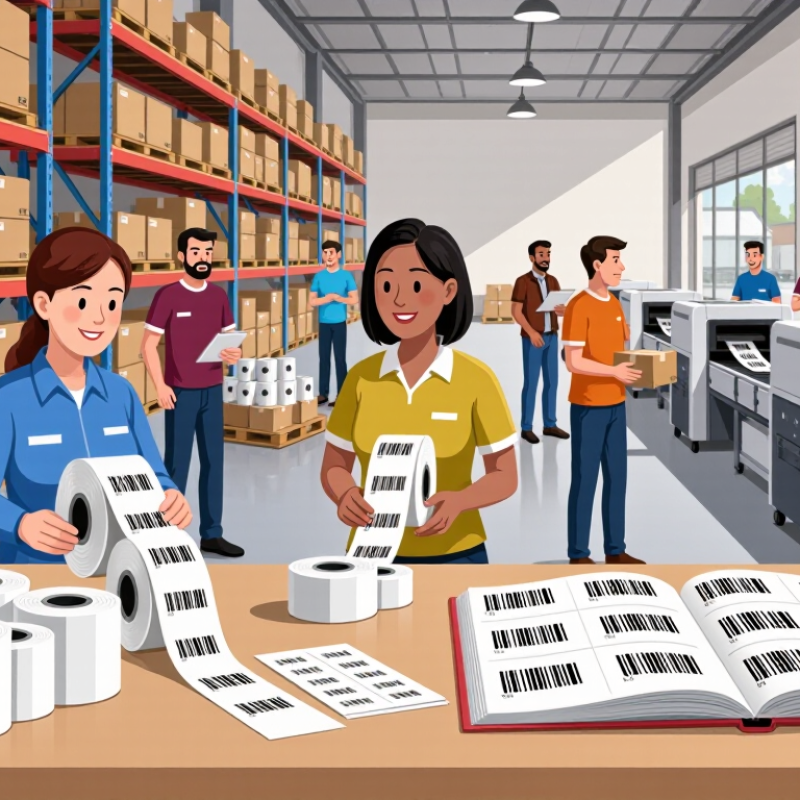
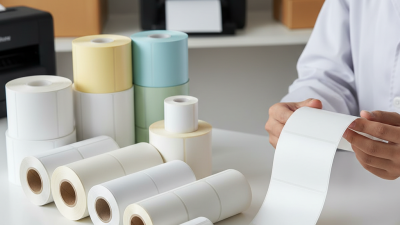
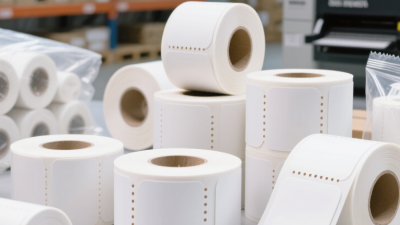
Thermal labels are pressure-sensitive labels printed by heat, not liquid ink. Direct thermal stock darkens when a heated printhead touches its coated surface. It suits shipping labels, receipts, weighing tickets, and short-life warehouse tags. Thermal-transfer stock uses a ribbon, producing sharper and more durable images. It works better for outdoor cartons, freezer storage, and long-term asset identification.
Demand follows physical commerce. Smithers’ 2024 thermal-printing analysis identifies logistics, retail, healthcare, and manufacturing as major application sectors. Grand View Research estimates the global thermal labels market will continue expanding through 2030, supported by parcel volumes and automated inventory systems. A barcode may look simple, but poor contrast, curled edges, or weak adhesive can stop a scanner. That costly detail is often ignored.
Tips: Match the label face to its environment. Direct thermal labels can fade under sunlight, heat, or friction. Test adhesive on corrugated boxes before bulk purchasing. Check the printer’s roll width, core size, and maximum outside diameter. ASTM-style abrasion and temperature testing can reveal weaknesses early. Still, laboratory results are not everything; humidity, dusty shelves, and hurried operators may expose problems that a clean test misses.
Supplier capability comparison for international buyers, presented without company or brand names.
| Rank | Supplier Profile | Primary Label Technology | Typical Materials | Common Label Sizes | Recommended Applications | Key Performance Features | Typical Export Readiness | Buyer Verification Points |
|---|---|---|---|---|---|---|---|---|
| 1 | High-volume logistics label manufacturer | Direct thermalThermal transfer | Coated paper, synthetic polypropylene, polyethylene | 4 × 6 in; 100 × 150 mm; custom sizes | Parcel shipping, pallet identification, warehouse operations | Fast printing, barcode clarity, roll consistency, strong adhesive options | Standard export packaging, carton labeling, multilingual documentation | Confirm core size, outside diameter, printer compatibility, adhesive temperature range, and barcode test results |
| 2 | Retail and point-of-sale label specialist | Direct thermal | White thermal paper, colored paper, removable adhesive stock | 1 × 1 in to 4 × 6 in; custom die-cut formats | Price marking, shelf labels, promotions, inventory tags | Clean die cutting, smooth release, good print contrast, removable adhesive choices | Private-label packaging and mixed-size order support | Check print darkness, adhesive residue, roll winding direction, and compatibility with desktop label printers |
| 3 | Durable industrial label manufacturer | Thermal transfer | Polyester, polypropylene, polyimide, coated synthetic films | 1 × 2 in to 6 × 8 in; custom formats | Electrical panels, machinery, asset tracking, outdoor equipment | High tear resistance, moisture resistance, chemical resistance, long-term readability | Technical datasheets, export cartons, batch traceability | Request abrasion, solvent, temperature, UV, and adhesion test information for the intended environment |
| 4 | Food and cold-chain label supplier | Direct thermalThermal transfer | Food-contact paper where applicable, freezer-grade synthetics, moisture-resistant paper | 2 × 1 in; 3 × 2 in; 4 × 6 in; custom sizes | Food date coding, chilled products, frozen goods, cold storage | Low-temperature adhesion, moisture resistance, grease resistance, readable variable data | Temperature and storage instructions available for export shipments | Verify food-contact suitability where required, freezer adhesion range, migration documentation, and local regulations |
| 5 | Healthcare identification label manufacturer | Direct thermalThermal transfer | Medical-grade paper, polyester, polypropylene, synthetic film | 1 × 1 in to 4 × 6 in; wristband and specimen formats | Patient identification, laboratory specimens, pharmacy, medical inventory | High contrast, secure adhesion, moisture resistance, small-format precision | Lot coding, material declarations, controlled packaging options | Check biocompatibility requirements, disinfectant resistance, adhesive performance, and applicable regional regulations |
| 6 | High-speed packaging and barcode label supplier | Thermal transferDirect thermal | Coated paper, polypropylene, polyester, linerless stock | 2 × 1 in to 4 × 8 in; continuous rolls available | Carton labels, product serialization, case packing, distribution centers | High-speed dispensing, consistent gap control, reliable barcode scanning | Supports palletized export orders and standardized carton markings | Confirm roll tension, label gap tolerance, winding direction, facestock thickness, and application speed |
| 7 | Eco-focused paper label supplier | Direct thermal | FSC-certified paper options, recycled paper options, water-based adhesive choices | 1 × 1 in to 4 × 6 in; custom die-cut formats | Retail, e-commerce, inventory, consumer packaging | Reduced material impact, recyclable paper options, low-odor adhesive alternatives | Environmental declarations and material documentation may be available | Verify certification scope, recycled content, liner disposal requirements, adhesive composition, and regional recycling rules |
| 8 | Custom short-run label converter | Direct thermalThermal transfer | Paper, synthetic film, colored stock, specialty adhesive materials | Small custom sizes through 4 × 6 in and larger formats | Product launches, seasonal labels, pilot production, specialty inventory | Low minimum order quantities, fast artwork changes, flexible die-cutting | Suitable for samples, mixed-SKU shipments, and smaller international orders | Ask about setup charges, proof approval, minimum order quantity, lead time, and repeat-order consistency |
| 9 | Security and asset-tracking label supplier | Thermal transfer | Destructible film, tamper-evident stock, polyester, VOID-effect materials | 0.5 × 1 in to 4 × 6 in; serialized custom formats | Warranty control, asset management, tamper evidence, anti-counterfeit workflows | Variable numbering, tamper indication, durable print, controlled-release adhesive | Serialization files, secure packing procedures, and batch traceability may be supported | Review security features, numbering controls, data privacy procedures, and resistance to solvents and abrasion |
| 10 | Global sourcing and private-label converter | Direct thermalThermal transfer | Paper, polypropylene, polyester, polyethylene, linerless materials | Standard sizes and fully customized dimensions | Import distribution, multi-country retail, contract packaging, branded-neutral supply programs | Multi-SKU management, packaging customization, consolidated production, flexible specifications | Export documentation, pallet planning, mixed-container coordination, and multilingual labels | Confirm production location, Incoterms, tariff classification, inspection process, sample approval, and continuity planning |
Buyer note: The most suitable supplier depends on label technology, facestock, adhesive, printer model, application temperature, exposure conditions, order volume, compliance requirements, and destination-country regulations. Always approve a physical sample and test it on the intended printer and application surface before placing a production order.