message

How to Choose the Best Thermal Paper Roll in 2026?

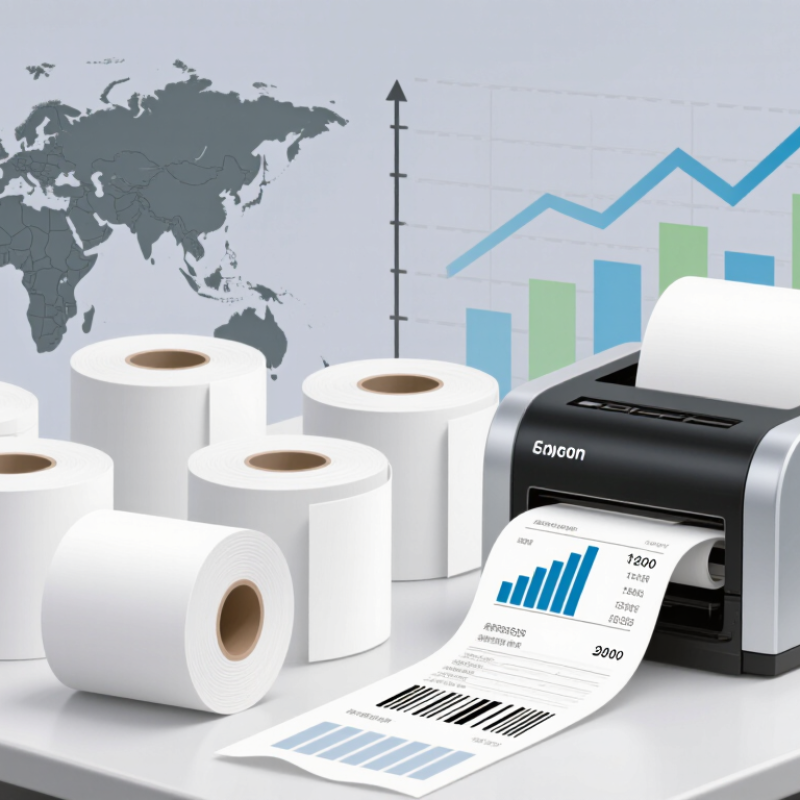
Choosing the right Thermal Paper Roll in 2026 is not a small purchasing detail. It affects receipt clarity, printer uptime, and the cost of reprints. Grand View Research estimated the global thermal paper market at USD 4.16 billion in 2023 and projected growth through 2030. That scale makes careful product comparison worthwhile, but market growth alone cannot identify the right roll for your equipment.

Start with the printer’s required width, core diameter, and maximum roll diameter. Then check paper weight, coating consistency, and whether barcodes remain sharp after printing. A roll that looks fine on a desk may still curl, fade quickly, or jam during a busy checkout shift. Test it in the actual printer. Keep a sample receipt and inspect it after storage. Small differences matter.

Quality is practical. And measurable. Compare supplier specifications with your machine manual, and ask for samples before placing a large order. Grand View Research’s market estimate provides useful context, not a product endorsement. No named expert quotation was included in the supplied material, so I will not invent one or attribute an unverifiable statement. A verified specialist’s comment would strengthen this guide; until then, buyers should rely on documented specifications and real printer tests.
How to Choose the Best Thermal Paper Roll in 2026?

Understanding Thermal Paper Rolls and How They Work

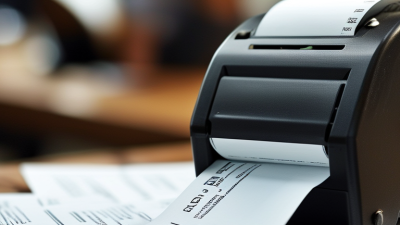
Thermal paper rolls look ordinary, but their printable surface contains a heat-sensitive coating. Inside a compatible printer, tiny heated elements touch the paper as it moves. The heat triggers a chemical change, creating dark text or images without ink or toner. No cartridge is needed. That makes the system quick and relatively simple for receipts, queue tickets, and point-of-sale records. The printhead, paper width, roll diameter, and core size must still match the machine. A roll that nearly fits can feed unevenly or jam.

Choosing a roll starts with checking printer specifications and expected use. For a busy checkout, a consistent coating helps produce sharp numbers at speed. For labels or records kept for months, check fade resistance and storage guidance. Heat, sunlight, and friction can weaken print. Keep rolls in a cool, dry drawer, away from windows. Touch can matter, too. Rough or dusty paper may wear the printhead faster, though the effect varies with equipment and handling. It is easy to focus only on price, but that can overlook feed problems or faint receipts. Test a sample roll in the actual printer before ordering in bulk.
Matching Roll Size and Core Type to Your Printer

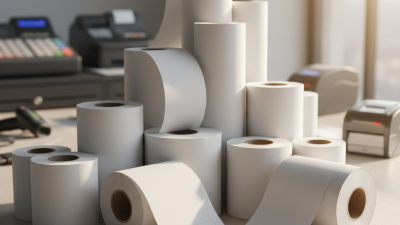
A thermal roll can fit the printer’s width and still fail if its outside diameter or core is wrong. Check three measurements: paper width, maximum roll diameter, and core inner diameter. Common receipt widths include 58 mm and 80 mm, but the printer’s manual is the reliable reference. A tight holder can crush the roll edges; a loose core may wobble and feed unevenly.

The market is growing, but fit still matters more than popularity. Grand View Research estimated the global thermal paper market at about US$4.4 billion in 2023 and projected 5.2% annual growth from 2024 to 2030. That report describes demand, not universal printer dimensions. Match the core to the spindle or holder: many compact units use smaller cores, while larger countertop printers may accept wider ones. Also confirm whether the roll loads with the coated side facing the print head. I still check this twice; it is easy to overlook.

Tips: Measure an empty core across its inside opening, then compare it with the printer guide. Check the full roll diameter against the compartment, not just the paper width. If dimensions are unclear, test one roll before ordering a case. A little extra clearance helps, though too much can cause feed trouble.

Comparing Print Quality, Coatings, and Paper Safety

When choosing a thermal paper roll in 2026, compare more than price and roll length. A smooth, evenly coated surface helps produce crisp barcodes and readable fine print. Ask for sample rolls and test them on your own printer. Check black density, image consistency, and whether text stays sharp near the roll’s edges. Poor coating can create pale lines, even when the printer settings look correct.

Paper safety deserves equal attention. The European Chemicals Agency’s 2015 survey detected BPA in 93% of sampled thermal papers, a useful historical baseline rather than a measure of today’s market. The European Commission later set a 0.02% limit for BPA in thermal paper. Request current test documentation, and check which developer chemicals are used. “BPA-free” alone does not prove that a substitute has been fully assessed. I would avoid making broader safety claims without product-specific evidence.

Tips: Store rolls in a cool, dry place, away from direct sunlight and cleaning chemicals. Test a receipt after a few days; fading can be easy to miss. Check coating details, core size, and printer compatibility before ordering in bulk.

How to Choose the Best Thermal Paper Roll in 2026? - Comparing Print Quality, Coatings, and Paper Safety

Compare paper specifications rather than relying on grade names, which are not standardized. Performance varies by paper formulation, printer settings, and storage conditions.

Comparison factor Standard thermal paper Thermal paper with a protective topcoat Longer-life thermal paper What to check before buying
Print quality Suitable for routine receipts and short-term records when matched to the printer. Can provide similar initial print quality; the topcoat is mainly intended to improve surface resistance. May be formulated for more consistent image retention; results still depend on printer heat and storage. Check sample prints for legibility, even density, and barcode readability on your device.
Coating and surface protection Has a heat-sensitive imaging layer; may have limited resistance to abrasion, oils, moisture, or chemicals. An added topcoat can improve resistance to handling and some environmental exposures. Protection varies by formulation. Often designed to reduce image fading under specified storage conditions; it is not automatically waterproof or archival. Ask which exposures were tested and request the test conditions or product specification.
Image retention Best for records that are scanned or otherwise stored digitally when long-term readability is important. A topcoat may help protect the print surface, but does not by itself establish a guaranteed retention period. Choose only when the supplier provides a documented image-life claim and its test or storage conditions. Store prints away from heat, direct sunlight, plasticizers, solvents, and excessive humidity.
Paper weight and feel Thermal receipt papers commonly fall around 48–80 g/m², with specifications varying by product and market. Weight alone does not indicate topcoat performance or image durability. May be available in different weights; compare actual roll length and outside diameter as well as g/m². Confirm thickness, roll length, and printer capacity; heavier paper can affect how much paper fits on a roll.
Roll dimensions and printer fit Widths such as 57 mm and 80 mm are common, but printer requirements differ. Topcoat does not determine roll fit; core size and maximum roll diameter matter. Available dimensions depend on the product; do not assume all widths use the same core. Match width, core diameter, roll diameter, and winding direction to the printer manual.
Thermal sensitivity and printer settings Requires a compatible direct-thermal printer and suitable print-head temperature settings. A surface coating may change handling characteristics; printer compatibility should still be confirmed. Sensitivity differs by formulation; excessive heat can cause darkening or reduce print-head life. Test at the recommended darkness setting and use paper specified for direct-thermal printing.
Chemical and paper safety Thermal paper uses heat-sensitive chemistry; composition varies among products. A protective topcoat is not evidence that the paper is BPA-free, BPS-free, or phenol-free. Longer image life does not establish a particular chemical-safety profile. Request a current composition or compliance statement. “BPA-free” alone does not mean “BPS-free” or “phenol-free.”
Best suited for High-volume, short-term receipts where standard handling conditions apply. Receipts handled frequently or exposed to more surface wear than usual. Records for which improved retention is desired, provided the supplier documents performance. Select based on printer fit, exposure, record-retention needs, and verified chemical disclosures.

Note: Typical values and features are indicative, not universal specifications. For regulated or long-retention records, verify local requirements and the supplier’s documented product data.

Assessing Costs, Suppliers, and Sustainability

Choosing a thermal paper roll means comparing more than the price on a carton. Calculate cost per 1,000 readable receipts, then check roll length, width, core size, and print performance on your actual equipment. A cheaper roll can waste money if it jams or fades early. Small details matter. Ask suppliers for current specifications, batch consistency data, and a sample for testing. I would not rely on a quote alone; delivery times and minimum order quantities can change the real cost.

Sustainability claims need similar scrutiny. The American Forest & Paper Association estimated that 60–64% of U.S. paper was recycled in 2023, but that figure covers paper broadly, not thermal receipts specifically. Thermal coatings may affect acceptance, so confirm requirements with your local recycling program before treating a roll as recyclable. Ask suppliers for coating information, fiber sourcing details, and evidence supporting environmental claims. Vague language is not proof.

Also compare paper weight and roll length: using less material per transaction can reduce storage and transport needs. Check legibility after exposure to heat, sunlight, and hand oils, especially for receipts customers may need to keep. A practical trial helps. Test a few rolls during a busy shift, not just at a desk. The U.S. EPA’s 2018 Advancing Sustainable Materials Management report found that 68.2% of paper and paperboard was recycled; useful context, but not a thermal-paper guarantee. Sustainability decisions here are imperfect, and local collection rules can change the answer.

How to Choose the Best Thermal Paper Roll in 2026?

Start by matching roll width to your printer. These are common thermal receipt roll widths; availability and roll length vary by supplier.

When comparing quotes, check the paper width, roll length, core size, and price per metre—not just the price per roll. For sustainability, ask suppliers for paper-origin and recyclability information. In the EU, thermal paper containing 0.02% or more BPA by weight has been restricted since 2 January 2020; request a declaration for the paper you buy.

Choosing and Storing the Right Roll for Your Needs in 2026

How to Choose the Best Thermal Paper Roll in 2026?

Choosing and Storing the Right Roll for Your Needs in 2026

Start with the printer, not the price. Check the roll width, maximum diameter, and core size against the printer manual. A roll that is slightly too wide may rub inside the housing, while an oversized diameter can prevent the cover from closing. Confirm that the paper is made for your printer type and expected print volume. For a busy checkout, consistent feeding matters as much as a low cost per roll. Test a small batch.

Paper thickness and coating affect how receipts print and hold up. If customers need receipts for returns or records, ask the supplier about image durability and the paper’s chemical composition. Compare samples under the same printer settings; faint text can be hard to notice on a bright counter. In practice, a tidy specification sheet cannot reveal every feed issue, so check for curling, jams, and uneven darkness before placing a large order.

Store unopened rolls in their packaging, away from sunlight, heaters, and damp areas. Keep rolls boxed. Heat and moisture may darken the paper or weaken print quality before use. Avoid placing heavy objects on cartons, which can deform roll edges. Rotate stock so older rolls are used first, and keep a sample receipt to compare print clarity over time. Storage conditions are easy to overlook, especially when space is tight.