Top Thermal Shipping Labels for Reliable Shipping
A shipping label has a small job with little room for error. It must stay attached, remain readable, and carry a barcode that scanners can interpret. Thermal Shipping Labels support this process by printing text and barcodes through heat, often without ink cartridges. The right choice, however, depends on the printer and the journey ahead. A label that works well on a clean warehouse carton may struggle on a damp parcel or a rough, recycled box.
Direct thermal labels are often practical for short-term shipping, while thermal transfer labels use a ribbon and may suit applications needing longer-lasting print. Printer compatibility matters. So do label width, core size, adhesive strength, and exposure to heat, sunlight, or moisture. Small details matter. A roll that feeds poorly can cause jams; weak adhesive can lift at the corners before delivery. Not every shipment faces the same conditions, and no single label is ideal for every route.
This guide explores dependable label options and the features worth checking before you buy. It focuses on print clarity, material, adhesive, and everyday printer fit—not claims that one product solves every problem. Test a sample with your own printer and packaging when possible. Look closely at the barcode after printing, then check whether the label stays flat on the carton. That extra check takes a moment. It can also reveal a mismatch that a product description may not make obvious.
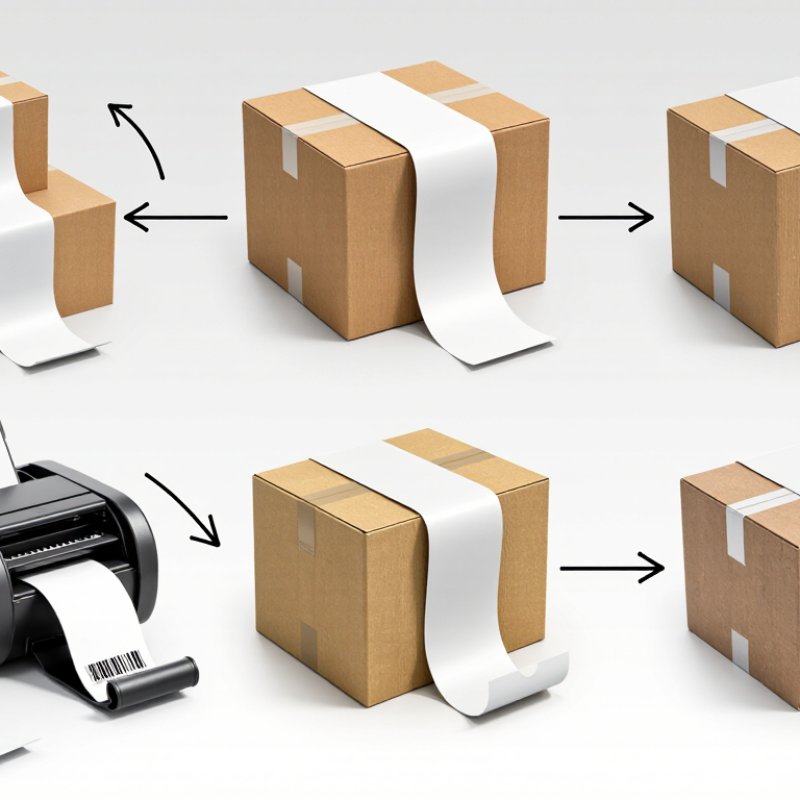
Types of Thermal Shipping Labels and How They Print
Thermal shipping labels print without liquid ink. Direct thermal stock has a heat-sensitive coating; the printer’s heated printhead darkens selected areas as the label passes beneath it. This makes printing simple, with no ribbon to replace. It suits fast-moving parcels and short-term use. But heat, sunlight, and friction can fade the image. A label left on a hot loading dock may become hard to scan.
Thermal-transfer printing works differently. Heat moves ink from a ribbon onto the label face, creating a more durable mark. It is often chosen for labels exposed to moisture, handling, or longer storage. The trade-off is extra setup: operators must match ribbon and label materials, then check print darkness and alignment. Small gaps in a barcode can cause a failed scan. Worth checking. The 2023 Parcel Shipping Index reported about 161 billion parcels worldwide in 2022, underscoring how often shipping labels must remain readable through busy sorting networks. That figure does not say which label type performs best; package conditions decide. A useful test is to print sample labels, rub them, and scan them after exposure to the route’s expected heat and handling. One detail is easy to miss: a durable print cannot fix a wrinkled label or a poorly placed barcode.
How to read this chart: 1 means “Yes” and 0 means “No.” Direct thermal printing uses heat-sensitive label stock and no ribbon. Thermal transfer printing uses a ribbon to transfer colorant onto the label.
Materials and Features That Support Reliable Shipping
Reliable shipping labels depend on more than a clear print. Direct thermal stock reacts to heat, so it suits many short-term shipping tasks without ink ribbons. For parcels exposed to sunlight, warm vehicles, or long storage, print can fade sooner. Thermal transfer stock uses a ribbon and often resists scuffing better. The right choice depends on the route and handling conditions, not just the printer.
Face material affects durability. A coated paper label can produce sharp barcodes and readable addresses, while synthetic film may better tolerate moisture and rough handling. Adhesive matters just as much. It should bond to the actual carton surface, including recycled cardboard with dusty fibers. Small details matter. A label that lifts at one corner can snag on a conveyor or obscure a barcode.
Test labels on real packages before a large run. Check barcode scans after rubbing, stacking, and brief exposure to damp conditions. Storage also deserves attention: heat and humidity can affect label stock before use. In practice, teams sometimes focus on print darkness and overlook adhesive performance. That is an understandable shortcut, but it can create avoidable rework. No single material performs best in every shipping environment, and a short trial may reveal limitations that product descriptions do not.
How to Match Labels to Printers, Packages, and Routes
A reliable shipping label starts with the printer, not the carton. Check the printer’s thermal type, maximum print width, resolution, and roll core before ordering. Direct thermal labels suit short journeys and quick turnover; thermal-transfer labels are often better when labels may face abrasion, sunlight, or long storage. A small mismatch can cause skewed prints or unreadable barcodes.
Package surface matters. Test adhesive on corrugated cardboard, recycled cartons, and any plastic mailers you use. Dusty or cold surfaces can weaken adhesion, while curved edges may lift during handling. Route conditions matter too: a label exposed to heat in a delivery vehicle may darken or fade.
The 2023 Parcel Shipping Index reported 161 billion parcels worldwide in 2022, with volume projected to reach 256 billion by 2027.
At that scale, small print failures can create real delays.
Tips: Print a sample at the printer’s normal speed, then scan it under warehouse lighting. Rub the barcode lightly and check that the corners stay flat. For long or rough routes, test a tougher face stock and adhesive on the actual package. I’d still recheck samples after storage; one test is not proof.
Comparing Label Performance in Common Shipping Conditions
Thermal label performance changes with route conditions, not just printer settings. The 2024 Parcel Shipping Index recorded 21.7 billion U.S. parcels in 2023, a reminder that labels face varied handling at scale. Direct thermal labels print without ribbons and suit short trips, but heat, sunlight, and friction can fade their image. A parcel left beside a sunny loading-bay door may show smudged barcodes before delivery. Thermal-transfer labels use a ribbon and generally resist abrasion better, making them a stronger choice for longer storage or rough handling.
Adhesive matters just as much. Cold cartons can weaken some adhesives, while condensation may lift label corners after a package moves from a chilled space into warm air. Test labels on the actual carton surface, including recycled board and curved edges. The ISTA 3A parcel-testing protocol includes drops and vibration; ASTM D4332 describes conditioning packages for temperature and humidity. These are useful test references, not guarantees for every route. Check barcode readability after exposure, not only at print time. Small detail, big consequence. One limitation: a short in-house test may miss seasonal extremes, so results deserve periodic review.
Best Practices for Applying and Storing Thermal Labels
A reliable thermal label starts with a clean, dry parcel. Dust, oil, or moisture can weaken the adhesive and cause corners to lift during transit. Press the label firmly from the center outward, smoothing trapped air toward the edges. Keep it flat. Place it on a smooth area, away from seams, tape, and sharp curves. Make sure the barcode is not folded or covered. Before a busy packing run, print one test label and scan it; a clear-looking barcode can still fail if lines are faint or streaked.
Store unused rolls in their original packaging, flat and away from sunlight, heaters, and damp areas. Heat and strong light can darken direct thermal material, while excess humidity may affect adhesive performance. Avoid putting heavy boxes on rolls, since pressure can deform their edges. Small details matter. Rotate stock so older rolls are used first, and check the label surface before loading each roll. If labels curl, feel tacky, or print unevenly, pause and inspect storage conditions and printer settings. It is tempting to blame the printer immediately, but the label stock may be the real issue. Follow the supplier’s storage guidance when available, since materials can vary.


 +86-15362608169