How to Choose the Best Sticker Paper for Your Printing Needs?
Choosing the right sticker paper can be a crucial decision for any printing project. According to industry expert Emma Williams, "The right sticker paper makes all the difference in quality and durability." Her insights highlight the importance of selecting a product that suits specific needs, whether for crafting, business, or personal use.
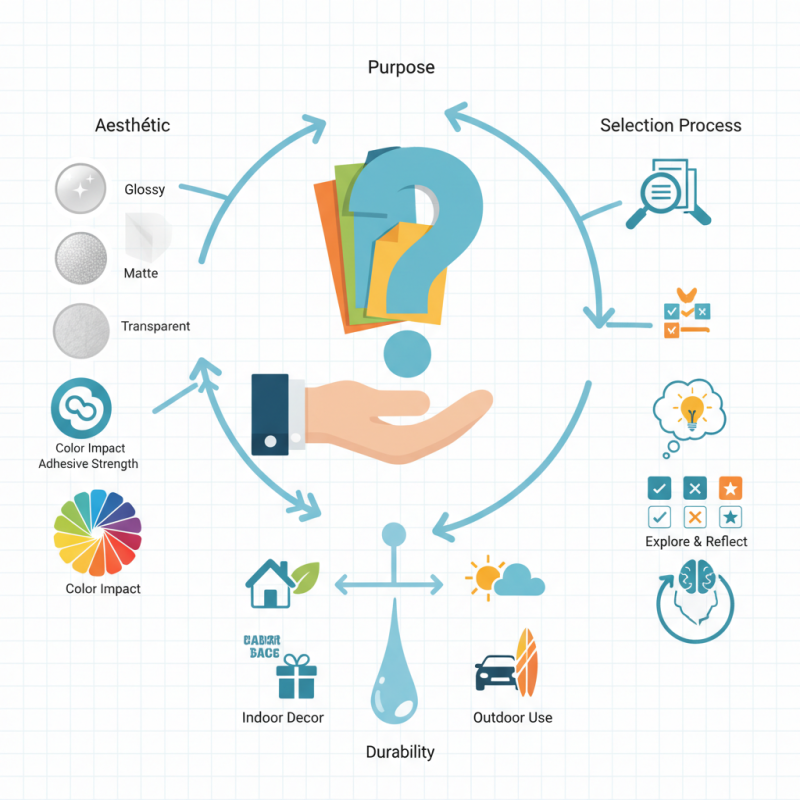
Sticker paper comes in various finishes and weights. Glossy, matte, or transparent options offer unique aesthetics and functions. Each type can dramatically affect the final outcome, such as colors used and adhesive strength. Understanding these characteristics is essential for achieving the desired result. You may find it tricky to navigate through the overwhelming choices.
When evaluating sticker paper, consider the purpose. Is it for indoor decor or outdoor use? This decision significantly influences the type of sticker paper you should use. Testing a few samples can reveal surprising results that may challenge your expectations. Don’t settle for the first option you find. Instead, take time to explore and reflect on your choices.
Understanding Different Types of Sticker Paper Available in the Market
When selecting sticker paper, understanding the various types available is essential. Each type serves different printing requirements and effects. Common options include glossy, matte, clear, and textured papers. Glossy paper offers vibrant colors, making it perfect for eye-catching designs. Matte paper provides a subtle finish, ideal for a more elegant look. Clear sticker paper allows for seamless applications, especially for intricate designs.
Tips: Consider your intended use. Will these stickers be used indoors or outdoors? Indoor stickers may need less durability compared to outdoor ones. Think about the printer you will use. Not all sticker papers are compatible with every printer type. Always check compatibility to avoid frustrating prints.
Textured paper adds depth and uniqueness. It’s suitable for invitations or art. However, sometimes the texture can affect print quality. A smooth finish might be better if clarity is a priority. Testing samples could save you disappointment later. Remember to examine the adhesive quality. A strong adhesive ensures longevity, while a weaker one may peel or curl over time.
Sticker Paper Types and Their Usage
Factors to Consider When Selecting Sticker Paper for Your Printer
When choosing sticker paper, several factors can influence your decision. The weight of the paper matters. Heavier paper typically offers better durability, while lighter options may be suitable for temporary use. A report from the Printing Industries of America found that paper weight impacts color vibrancy. Thicker paper can produce richer, more vibrant colors, enhancing the visual appeal of your stickers.
The finish is another critical aspect. Glossy finishes tend to make colors pop. Meanwhile, matte finishes can give a more professional look. However, matte stickers may not be as water-resistant. According to a study published by the International Journal of Printing Technology, about 40% of users prefer a glossy finish for promotional stickers. It's important to note that user preference can vary significantly based on the application.
Printer compatibility cannot be overlooked. Certain printers function better with specific types of paper. For example, inkjet printers may require different settings for glossy versus matte sticker papers. Research indicates that over 30% of sticker paper users experience issues due to mismatched printer settings. This emphasizes the need for careful selection based on your specific printing equipment.
How to Choose the Best Sticker Paper for Your Printing Needs?
| Paper Type |
Finish |
Ink Compatibility |
Adhesive Type |
Best For |
| Matte |
Non-reflective |
Inkjet |
Permanent |
Labels, Journals |
| Glossy |
Shiny |
Inkjet, Laser |
Removable |
Product Stickers |
| Clear |
Transparent |
Inkjet |
Permanent |
Window Decals |
| Vinyl |
Weatherproof |
Inkjet, Laser |
Permanent |
Outdoor Use |
| White Paper |
Opaque |
Inkjet, Laser |
Permanent |
General Purpose |
Identifying the Right Adhesive Type for Your Sticker Application
Choosing the right adhesive type for your sticker application is crucial. The adhesive quality determines how well your sticker adheres to surfaces. According to industry data from the Pressure Sensitive Tape Council, over 50% of users report issues with sticker adhesion due to mismatched adhesive types.
There are several adhesive categories to consider. Permanent adhesive offers strong adhesion for surfaces like metal or wood. Removable adhesive is great for temporary applications, allowing easy removal without damage. A study from the Flexible Packaging Association revealed that 72% of users prefer removable adhesives for promotional stickers, underscoring the need for flexibility in marketing materials.
However, selecting the wrong adhesive can lead to significant waste and customer dissatisfaction. Some users have found that aggressive adhesives can damage surfaces. It's essential to understand your specific needs before selection. Test samples on different surfaces to see what works best for your application. Gathering feedback during this testing can refine your choice, ensuring better results in the long run.
Evaluating Finish Options: Matte vs. Glossy Sticker Paper
When selecting sticker paper, one of the key factors is the finish.
Matte and glossy sticker papers significantly affect the look and feel of your printed materials.
Matte paper offers a subdued finish, reducing glare and enhancing readability.
This quality makes it ideal for designs requiring fine detail. According to industry reports, approximately
60% of consumers prefer matte finishes for professional-looking labels.
In contrast, glossy sticker paper
provides a vibrant and reflective surface. This finish is excellent for colorful designs, making them pop.
Moreover, glossy paper typically enhances ink saturation, which is crucial for high-quality prints.
However, it’s worth noting that glossy surfaces can show fingerprints and scratches more easily than matte options.
For photographs and promotional materials, glossy paper can be powerful, but it might not suit every application.
Tip: Before committing to a large print run, test both finishes.
Print samples to see how your design interacts with each option.
Pay attention to color accuracy and surface durability. Additionally, consider the end-use of your stickers.
For outdoor applications, a gloss finish may improve water resistance and longevity.
Conversely, for indoor use where legibility is key, matte could be the better choice.
Testing and Preparing Your Design for Optimal Print Quality
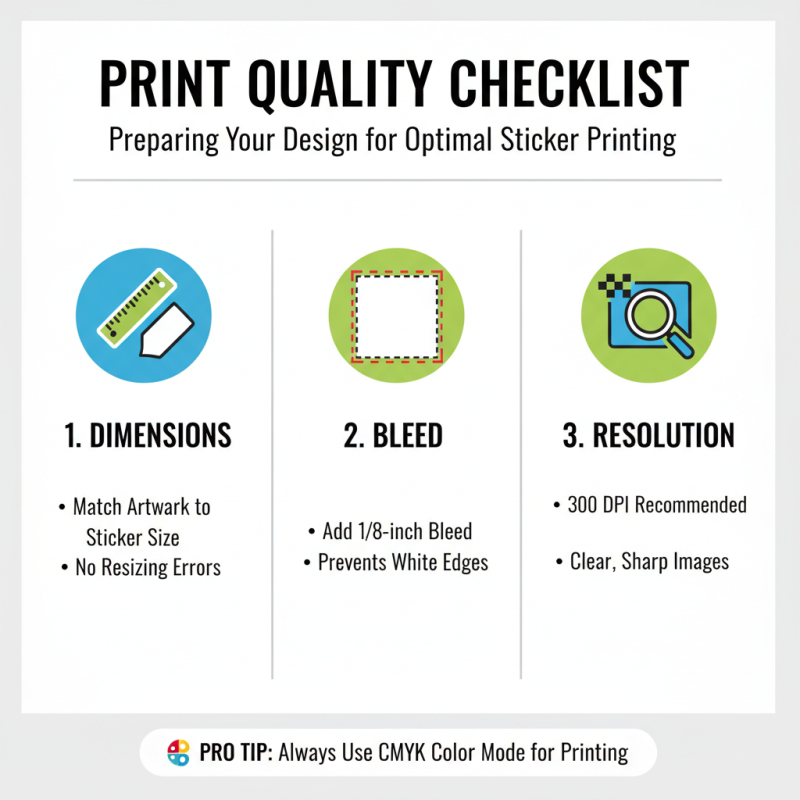
Preparing your design for optimal print quality requires attention to detail. Begin by ensuring your artwork matches the dimensions of the sticker paper. A common pitfall is overlooking bleed areas. Including a 1/8 inch bleed can prevent unwanted white edges after cutting. According to a professional printing report, inadequate bleed can compromise the overall appearance of your stickers.
Next, select the right resolution for your images. A resolution of 300 DPI is standard for high-quality prints. If your design is low-resolution, the outcome may appear pixelated and unprofessional. During testing, print a small proof to evaluate colors. This can reveal issues like color shifting or unexpected contrasts. Many artists underestimate the importance of color profiles, which can significantly affect how colors appear in print.
Lastly, the choice of paper is crucial in the printing process. Ensure the paper type matches your design’s purpose. Matt or glossy finishes can dramatically change the visual impact. A study by the Printing Industries of America indicates that 70% of businesses prioritize quality over price. Experiment with different settings and materials to discover what works best for your specific needs. This trial and error approach fosters deeper understanding and mastery over the printing process.


 +86-15362608169