

 +86-15362608169


Industry News





Biodegradable electronic tags: The tag Revolution in the Green and intelligent era
2025-12-02
1、Market pattern: North America and Europe dominate, while the Asia-Pacific region is accelerating its rise.

01.Global Market: Duopoly and Regional Differentiation
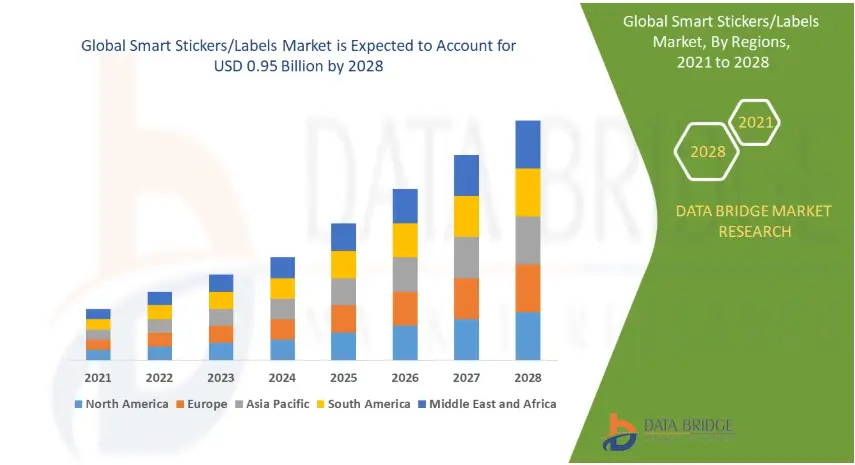
In 2024, the global production of biodegradable electronic tags is approximately 3.43 billion, with an average unit price of 0.20 US dollars. From the production perspective, North America and Europe, leveraging their technological accumulation and leading position in environmental protection regulations, hold a dominant position, with a combined market share exceeding 65% by 2024. Among them, North America has become the largest consumer market due to the strong demand for logistics automation.
02.Chinese Market: Scale Expansion and Localization Breakthrough
As a global manufacturing hub, China's market size in 2024 is not yet clear, but its growth rate leads the world. It is expected that the global share will exceed 20% by 2031, making it the second-largest market after North America.
03.Competitive landscape: Leading enterprises have high technological barriers
In the international market, five major manufacturers such as Avery Dennison, Smartrac and Zebra Technologies occupy approximately 60% of the market share, forming a full industrial chain layout of "material research and development + chip integration + system solutions".
2、Technological Trends: NFC tags lead the way, with diverse application scenarios
Biodegradable electronic tags are classified into two types based on technology: RFID tags and NFC tags. Among them, NFC tags are widely used in retail payment, smart packaging and other fields because they support short-range wireless communication and do not require dedicated equipment for reading. It is expected that its market share will reach 45% by 2031, making it a mainstream product.
3、Challenges and Opportunities: Policy, Cost and Ecological Synergy
At present, the cost of degradable electronic tags is 2 to 3 times that of traditional tags, mainly due to the high price of bio-based materials. Furthermore, the lack of a unified global degradation certification standard has led to a mixed market.
Governments around the world are promoting the implementation of industries through policies such as subsidies and tax incentives.
The rise of degradable electronic tags is not only the result of technological iteration but also a reflection of the global consensus on sustainable development. From North American logistics centers to smart factories in China, from food to smart packaging, this niche market is reshaping the industrial rules at an annual growth rate of 17.5%.
For enterprises, seizing the dual-wheel drive opportunities of "environmental protection + intelligence" may give them an edge in the 14.4 billion yuan market. For the industry, only through technological innovation, standard unification and ecological synergy can it achieve the leap from "scale expansion" to "value upgrade".