+86-15362608169
In 2026, choosing the right Thermal Shipping Labels involves more than comparing roll prices. Buyers must consider printers, package surfaces, shipping conditions, and daily handling speed. A label that performs well on a clean carton may fail on recycled cardboard. Cold storage can create another problem. Adhesive strength matters.
This guide introduces the leading label types for modern warehouses, online sellers, manufacturers, and third-party logistics providers. Direct thermal labels remain popular because they need no ribbon and support fast, simple printing. Thermal transfer labels offer stronger image durability for long-distance transport, outdoor storage, and demanding handling. Linerless labels can reduce backing waste, while fanfold labels may suit high-volume packing stations with limited roll space. RFID-compatible options add tracking potential, but they require compatible equipment and more careful testing.
Small details matter.
In practical purchasing work, sample testing often reveals weaknesses that product sheets hide. Check barcode readability after refrigeration, stacking, rubbing, and exposure to dust. Test the adhesive on corrugated cartons, plastic mailers, and reused boxes. Also review core size, roll diameter, printer calibration, and application temperature. A lower unit cost may become expensive when labels jam or peel away.
No single label type fits every operation. That is the part buyers may underestimate. A reliable decision balances material, adhesive, print method, environmental demands, and total operating cost. The sections ahead compare these factors clearly, helping readers make a confident choice while recognizing where further testing is still necessary.
Thermal Shipping Labels: Definition, Purpose, and Core Printing Methods
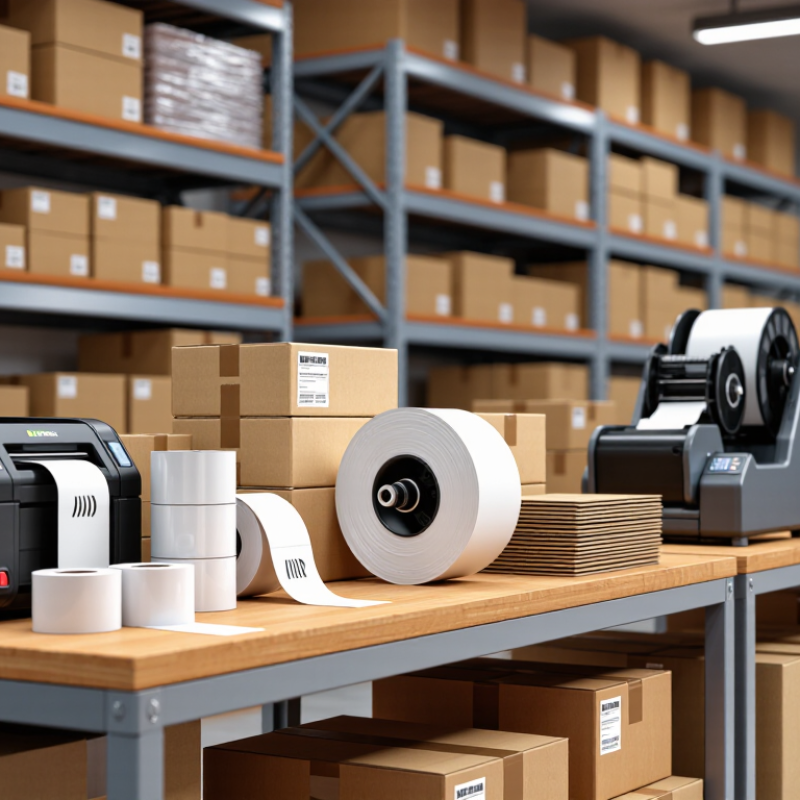
Thermal shipping labels are pressure-sensitive labels printed with heat instead of liquid ink. They help identify parcels, cartons, return packages, and warehouse locations. A typical label includes a barcode, address, tracking number, and handling details. Clear printing matters because scanners may reject faint or damaged codes.
Two core printing methods serve different shipping conditions. Direct thermal printing heats a chemically treated label surface. It needs no ribbon and supports fast, simple processing. However, sunlight, heat, or prolonged storage can darken the label. Thermal transfer printing uses a heated ribbon to transfer ink onto the label. The result usually resists heat, moisture, and abrasion more effectively. It suits long-distance transport and records that must remain readable.
Material selection deserves practical attention. Paper labels work well for ordinary indoor shipping. Synthetic faces perform better around condensation, rough handling, or changing temperatures. Adhesive strength also matters. A cold carton, dusty surface, or curved package can reduce adhesion. I have seen a readable label fail because one corner lifted during handling. That detail is easy to overlook. Buyers should test the full combination: printer, label stock, ribbon, adhesive, and scanner. One method is not automatically better. Printing speed, storage time, surface conditions, and budget should guide the choice. Even experienced teams should review samples before ordering large quantities.

2026 Top Types of Thermal Shipping Labels for Buyers
Direct Thermal vs. Thermal Transfer Labels: Key Differences
Direct thermal labels create images through heat-sensitive coating. A printer heats selected dots, and the surface turns dark. No ribbon is required. This makes direct thermal printing quick, clean, and simple for short-term shipping labels. It suits parcels moving through controlled networks within days or weeks. However, sunlight, high temperatures, and friction can darken or fade the image. A label left beside a warehouse window may lose contrast. The blank roll feels convenient, but its limited lifespan deserves attention.
Thermal transfer labels use a heated ribbon to place ink onto the label surface. They generally resist moisture, abrasion, chemicals, and temperature changes better. This option fits inventory labels, outdoor handling, and shipments needing longer identification. Buyers should match the ribbon and label material carefully. Poor compatibility can cause smearing, weak edges, or unreadable barcodes. Small testing matters.
A practical check is simple. Print a barcode, rub it firmly, and expose it to the expected environment. Then scan it from normal handling distance. Direct thermal often reduces purchasing steps and equipment cleanup. Thermal transfer adds ribbon waste and operating adjustments, yet it can prevent relabeling costs. The choice is not always clean-cut. A busy warehouse may value speed, while a cold or dusty route may demand stronger image stability. I would not choose from price alone. The cheapest roll can become expensive when labels fade, curl, or require manual replacement.
Direct Thermal vs. Thermal Transfer Labels: Key Differences
The chart uses a relative resistance index from 1 (low) to 5 (high), based on the typical material behavior of each printing method. Direct thermal labels are suitable for short-term shipping and logistics applications, while thermal transfer labels generally provide stronger resistance to heat, moisture, sunlight, abrasion, and long-term handling.
Ratings are representative planning values. Actual performance depends on label stock, ribbon or coating, printer settings, storage conditions, and exposure time.
Thermal shipping labels differ in material, size, adhesive, and finish. Direct thermal paper is practical for short-term parcels and routine warehouse use. It needs no ribbon, which simplifies printing. Thermal transfer labels use a ribbon and usually resist heat, moisture, and abrasion better. For outdoor handling or long storage, polypropylene or polyester can offer stronger protection than paper. I have found that choosing the cheapest stock often creates peeling edges later.
Common sizes include 4 x 6 inches for carrier labels, 4 x 8 inches for larger shipping details, and compact formats for bins or return labels. Measure the package surface before ordering. A label that wraps around a corner may wrinkle or lose scan quality. Adhesive strength also matters. Removable adhesive suits temporary identification, while permanent adhesive works better on clean cardboard and plastic surfaces. Cold environments may require a freezer-grade adhesive.
Tips: Test a small batch first. Print realistic barcodes and expose samples to handling, dust, and temperature changes. Compare matte and gloss finishes under warehouse lighting. Matte surfaces usually reduce glare and support easier scanning. Gloss can look sharper, but fingerprints and reflections may interfere. Do not overlook the liner, either. A stiff liner feeds better in some printers, though it can increase waste. My preference is based on application, not habit; every packaging line has its own weak points.
| Label Type | Common Face Material | Typical Shipping Sizes | Adhesive Options | Typical Finish | Best-Fit Applications | Durability Profile | Buyer Considerations |
|---|---|---|---|---|---|---|---|
| Direct Thermal Paper | Heat-sensitive coated paper | 4 × 6 in; 4 × 8 in; 4 × 6.75 in; custom widths from about 1 to 8 in | Permanent, removable, freezer-grade, and high-tack | Matte or semi-gloss; uncoated back liner or linerless construction | Short-term parcel shipping, warehouse cartons, courier labels, return labels | Good for indoor and short-term distribution; image can fade with heat, sunlight, abrasion, or chemicals | Lowest material cost and no ribbon required; select protective coating when labels may face moisture or friction |
| Thermal Transfer Paper | Uncoated or coated paper designed for ribbon printing | 4 × 6 in; 4 × 8 in; 3 × 5 in; custom roll and fan-fold formats | Permanent, removable, cold-temperature, and freezer-grade | Matte, semi-gloss, or smooth coated surface | Longer-retention shipping records, carton identification, inventory, and compliance labels | Better resistance to light and moderate abrasion than direct thermal paper when paired with a suitable ribbon | Requires a compatible thermal transfer printer and ribbon; offers wider material and durability choices |
| Polypropylene (PP) Synthetic | White or clear biaxially oriented polypropylene film | 4 × 6 in; 4 × 8 in; 2 × 4 in; custom widths and shapes | Permanent, removable, all-temperature, and high-tack | Matte, semi-gloss, gloss, or clear; optional overlamination | Moisture-prone parcels, outdoor logistics, reusable containers, and high-value shipments | Water-resistant, tear-resistant, and more durable than paper; temperature performance depends on adhesive and coating | Higher cost than paper; verify printer settings, ribbon compatibility, and recyclability requirements |
| Polyethylene (PE) Film | Flexible white or clear polyethylene film | 4 × 6 in; 2 × 4 in; 3 × 5 in; custom narrow-format labels | Permanent, freezer-grade, flexible-surface, and removable | Matte, satin, or gloss | Curved packages, flexible mailers, chilled goods, and applications requiring conformability | Flexible and moisture-resistant with good impact performance; generally less rigid than PP or PET | Choose an adhesive tested for low-energy or flexible surfaces to reduce lifting and edge curl |
| Polyester (PET) Film | White, silver, or clear polyester film | 4 × 6 in; 2 × 4 in; 1 × 3 in; custom durable formats | Permanent, high-tack, chemical-resistant, and all-temperature | Matte, gloss, metallic, or clear | Outdoor shipping, hazardous-material identification, equipment tags, and long-life asset tracking | High tear, abrasion, moisture, and dimensional resistance; suitable for demanding environments | Usually one of the more expensive options; use a compatible resin or resin-enhanced ribbon for maximum durability |
| Freezer and Cold-Temperature Label | Direct thermal paper, coated paper, PP, or PET | 4 × 6 in; 2 × 4 in; 3 × 5 in; custom formats | Cold-temperature adhesive, freezer-grade permanent adhesive, or removable cold adhesive | Matte, semi-gloss, or gloss; optional moisture barrier | Frozen food, refrigerated shipments, laboratory packages, and cold-chain cartons | Adhesion is designed for chilled or frozen surfaces; face material must still be matched to moisture and abrasion exposure | Confirm the adhesive's application and service temperature range; surface must be clean and dry unless specified otherwise |
| Removable Thermal Label | Direct thermal paper, coated paper, or synthetic film | 4 × 6 in; 2 × 4 in; 3 × 5 in; custom sizes | Low-tack removable adhesive; residue-resistant options available | Matte, semi-gloss, or gloss | Reusable totes, rental equipment, temporary routing, retail returns, and shelf identification | Designed for clean removal rather than maximum permanence; performance varies with dwell time, temperature, and surface | Test on corrugated board, plastic, metal, and painted surfaces before high-volume purchasing |
| High-Tack Shipping Label | Paper, PP, PE, or PET film | 4 × 6 in; 4 × 8 in; 2 × 4 in; custom sizes | Aggressive permanent adhesive; options for rough, dusty, recycled, or corrugated surfaces | Matte, semi-gloss, or gloss | Rough cartons, recycled fiberboard, irregular packaging, and distribution environments with heavy handling | Improved initial grab and holding power; not intended for clean removal | Adhesive strength should be balanced against package recycling, label removal, and application-temperature requirements |
| Linerless Thermal Label | Direct thermal paper or synthetic film with release coating | Variable length; commonly cut to approximately 4–8 in wide formats | Permanent or removable adhesive applied in a continuous roll construction | Coated matte or semi-gloss; die-cut or perforated configurations | Variable-weight parcels, food logistics, dispatch operations, and applications seeking reduced liner waste | Material durability depends on the face stock; exposed adhesive edges may require careful handling | Requires a compatible linerless printer and cutter; can reduce backing waste and improve roll-label efficiency |
Buyer note: Actual label performance depends on printer compatibility, print method, surface energy, application temperature, service temperature, moisture, abrasion, and required label life. Dimensions shown are common market formats; custom sizes are widely available.
Choosing a thermal shipping label starts with the shipping environment, not the lowest unit price. Direct thermal labels suit short-term shipments, especially when packages avoid heat and direct sunlight. Thermal transfer labels offer stronger resistance for storage, moisture, abrasion, and longer delivery cycles. They require a compatible ribbon, which adds handling time and operating cost.
Measure the package surface before ordering. Corrugated boxes, plastic mailers, and reusable containers may need different adhesive strengths. A label that sticks well to cardboard may lift from a dusty or flexible mailer. Select a size that leaves quiet space around the barcode. Crowded printing can reduce scanning reliability. Test before scaling.
Printer compatibility is equally important. Confirm the roll width, core size, winding direction, and print method. Small warehouses often overlook these details. That mistake can cause misfeeds, wasted labels, and delayed dispatches. Use labels with a surface that supports sharp text and consistent barcode contrast. Verify samples after cold storage, rubbing, and normal handling.
For returns or extended storage, choose materials and adhesives designed for durability. For fast-moving parcels, economical direct thermal stock may be sufficient. Keep a small test batch in the actual packing area. Real conditions reveal problems that product specifications may miss. A careful buyer also records failed tests, because one “acceptable” label may still perform poorly during seasonal volume.
Thermal shipping labels in 2026 mainly fall into direct thermal and thermal transfer types. Direct thermal labels suit short-term parcels and use heat-sensitive material without ink or ribbon. Thermal transfer labels need a ribbon, but they usually resist moisture, sunlight, and abrasion better. The right choice depends on the shipment’s journey, not just the printer price.
Check printer compatibility before ordering a full case. Match the label width, roll diameter, core size, and printing method. Confirm whether the printer reads gaps, black marks, or continuous stock. Adhesive matters too. A label that peels from a cold carton creates rework and delays. Test a small batch first. Printer manuals help, but real packaging tests reveal more.
Durability testing should reflect actual handling. Rub printed samples against cardboard, chill them, and expose them to moderate moisture. Watch for fading, curling, and adhesive transfer. For cost efficiency, calculate more than the roll price. Include ribbon use, liner waste, rejected labels, jams, and relabeling labor. A cheaper roll may cost more after one poor print run. I have seen buyers overlook storage conditions, especially heat and humidity. That mistake is easy to repeat. Keep unopened rolls sealed, and inspect the first labels from every shipment. A perfect checklist still needs practical judgment.