+86-15362608169
Personalized Vinyl Stickers have moved far beyond simple decoration. They now appear on laptops, water bottles, shop windows, packaging, helmets, and event materials. A small sticker can carry a name, logo, illustration, or private message. It can also make an ordinary surface feel deliberately chosen.
According to Steve Sanderson, a veteran sign-production consultant, “Good vinyl work is judged by what remains after the excitement fades.” This practical view explains part of the product’s appeal. High-quality vinyl resists light moisture, handles daily contact, and keeps printed colors sharp when properly produced. Buyers also enjoy control. They can choose a shape, finish, size, and design without ordering thousands of units. That flexibility suits small businesses, creators, schools, clubs, and individual customers.
The popularity is not only about appearance. Personalized Vinyl Stickers offer visible identity at a relatively modest cost. A coffee cup with a hand-drawn name feels more personal than a blank cup. A parcel with a branded seal can make a small business look more established. These details are easy to notice.
Yet the product is not perfect. Cheap adhesive may lift at the corners. Dark colors can print differently than expected. Some designs look attractive on a screen but crowded on a curved surface. Customers sometimes underestimate those limits. Careful material selection, accurate proofs, and realistic expectations matter.
That balance makes the subject worth examining. Why do these small printed pieces create such strong emotional and commercial value?
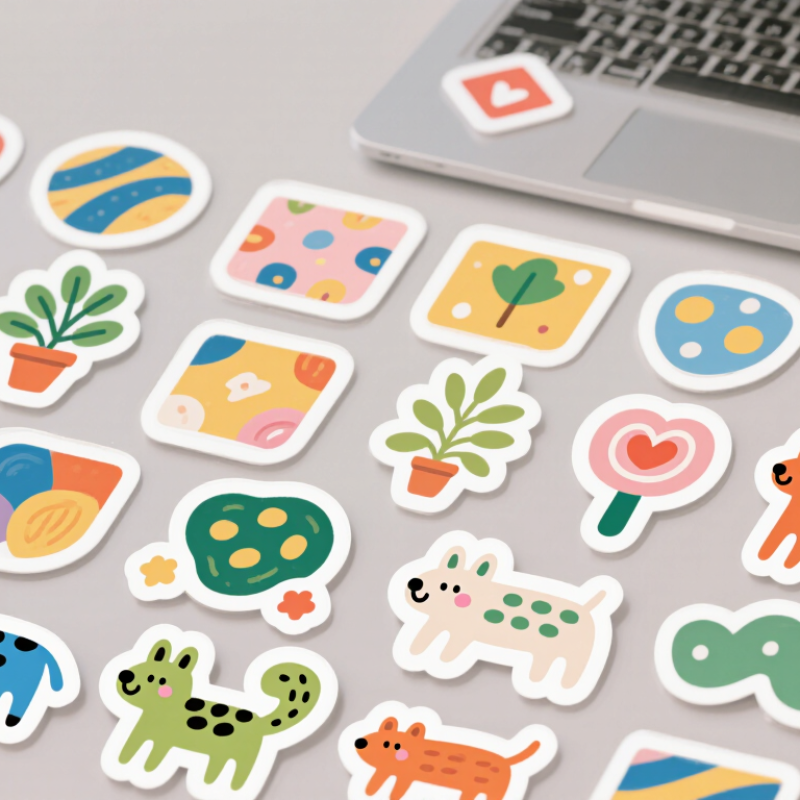
Personalized vinyl stickers are custom adhesive graphics made from flexible plastic film. They can be printed with names, illustrations, symbols, or short messages. Some designs are cut into special shapes instead of using a plain rectangle. A typical sticker includes a vinyl surface, printed ink, and pressure-sensitive adhesive. Compared with paper stickers, vinyl usually handles light rain, sunlight, and frequent handling better. It is also easy to wipe clean. Small detail, clear impact.
Their popularity comes from practical flexibility. People use them on notebooks, water bottles, storage boxes, laptops, bicycle helmets, and event materials. A personalized design can mark ownership without permanent engraving. For reliable results, the surface should be smooth, clean, dry, and free from oil. I have found that dust under the sticker creates visible bumps, even when the artwork looks perfect. Outdoor use also requires suitable ink and, often, a protective laminate. These choices affect color stability and edge protection.
Vinyl is durable, but it is not indestructible. Textured surfaces may prevent full adhesion. Strong heat can soften the glue, while cold weather may make application difficult. Some stickers resist water but are not fully waterproof, especially around unsealed edges. That limitation matters. A carefully chosen size, finish, and adhesive usually improves performance. Still, customization can invite overdesign. Too many colors or tiny details may disappear after cutting. A simpler graphic often communicates better, though that is easy to forget during the design stage.
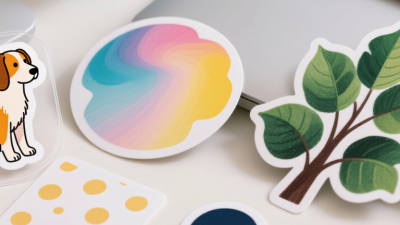
Personalized vinyl stickers combine custom design, strong adhesion, water resistance, and flexible indoor or outdoor use.
The chart shows typical service-life estimates for pressure-sensitive vinyl stickers in common environments. Actual performance varies with surface preparation, sunlight, temperature, abrasion, adhesive quality, and whether the sticker is laminated. Vinyl stickers are popular because they offer a practical balance of customization, durability, and relatively simple application.
Data basis: commonly reported industry ranges for general indoor, outdoor, vehicle, and high-abrasion applications; values are midpoint estimates and are not brand-specific.
Why Are Personalized Vinyl Stickers So Popular?
How Personalization Shapes Their Design and Meaning
Personalized vinyl stickers turn ordinary surfaces into small records of identity. A name, inside joke, date, or hand-drawn symbol can make one sticker feel unusually personal. I have seen simple designs attract more attention than complicated artwork. The reason is often recognition. People notice something that reflects their memories, hobbies, or daily language.
Personalization also changes practical design choices. A long phrase may need wider spacing, while a small icon needs strong contrast. In production, clean vector shapes usually cut more accurately than detailed images. A suitable vinyl surface affects the final impression too. Matte material feels quiet and soft. Glossy material makes bright colors appear sharper. These details influence meaning before anyone reads the sticker.
Yet personalization is not always elegant. My early designs often included too many colors and tiny details. They looked exciting on screen but became unclear after printing. That mistake taught me to test size, contrast, and readability on real objects. A sticker placed on a laptop, notebook, or water bottle must work from a short distance. It should also match the owner’s habits, not only current design trends. Sometimes a slightly imperfect drawing carries more warmth than polished artwork, because it shows a person rather than a template.
| Design Dimension | Typical Data or Specification | How Personalization Changes the Design | Meaning and User Value |
|---|---|---|---|
| Sticker Size | 2–4 in (5–10 cm) is a common range for laptops, notebooks, bottles, and phone cases. | Names, initials, short phrases, and simple icons remain legible within a compact format. | Small stickers provide an easy, low-commitment way to display identity or interests. |
| Shape | Popular options include circles, squares, rectangles, die-cut outlines, and custom silhouettes. | The contour can follow a mascot, monogram, illustration, handwritten word, or symbolic object. | A custom shape makes the sticker feel more distinctive and visually connected to its subject. |
| Color Palette | Most designs use 2–5 dominant colors to maintain contrast and recognition at small sizes. | Personal color choices can reflect hobbies, emotions, cultural associations, or a preferred aesthetic. | Color helps communicate mood quickly, such as playful, calm, energetic, minimal, or nostalgic. |
| Typography | Short text is generally easier to read when letters have clear spacing and strong contrast. | Users can select a type style that feels handwritten, elegant, bold, humorous, or informal. | Lettering transforms ordinary text into a recognizable personal signature. |
| Image Personalization | Portraits, pets, hobbies, artwork, symbols, and line illustrations are common image categories. | Personal images replace generic decoration with content that is directly connected to the owner. | The sticker can preserve a memory, celebrate a relationship, or represent a personal passion. |
| Material | Self-adhesive vinyl is flexible, water-resistant, and suitable for smooth surfaces when properly applied. | Material selection can be matched to the intended setting, such as indoor decoration or outdoor use. | Durable material increases confidence that the personalized design will remain useful over time. |
| Surface Finish | Gloss finishes increase visual brightness, while matte finishes reduce reflections and fingerprints. | The finish can reinforce the design personality: vivid and playful or subtle and refined. | Finish affects both appearance and how comfortably the sticker fits into the surrounding object. |
| Outdoor Resistance | Outdoor-rated vinyl stickers commonly provide approximately 3–5 years of durability, depending on sunlight, moisture, abrasion, and production quality. | Users can adapt the design for vehicles, helmets, outdoor equipment, or temporary event decoration. | Longer service life makes personalization practical beyond indoor crafts and stationery. |
| Application Surface | Best results are usually achieved on clean, dry, smooth, and non-porous surfaces. | The design may be simplified or resized to suit a laptop, water bottle, window, notebook, or storage box. | Flexible placement allows people to personalize everyday objects without permanently altering them. |
| Emotional Function | Common purposes include self-expression, gifting, group identification, memory keeping, and decoration. | Design choices combine personal text, imagery, color, and shape into one compact visual message. | The sticker becomes more than an accessory: it can act as a small symbol of belonging, creativity, or remembrance. |
| Production Flexibility | Digital printing and cutting support one-off designs as well as small personalized batches. | Each sticker can be adapted without changing the entire visual system or producing a large quantity. | Low-volume customization makes personalized designs accessible for individual users and small events. |
Vinyl remains popular because it handles real-world use better than ordinary paper. A quality vinyl sticker can resist splashes, sunlight, abrasion, and temperature changes. It also feels smooth and substantial. That matters on water bottles, laptops, shop windows, helmets, and outdoor equipment. However, “waterproof” is not automatic. Ink, adhesive, and protective laminate affect performance.
Grand View Research estimated the global self-adhesive labels market at about 49 billion U.S. dollars in 2023. Its report also forecasts continued growth through 2030, supported by packaging, product identification, and promotional applications. This wider market does not represent personalized stickers alone, but it shows strong demand for pressure-sensitive label materials. Smithers’ printed-labels research similarly identifies digital printing and short production runs as important growth areas. That supports personalization, since users can order varied designs without large minimum quantities.
Vinyl also accepts vibrant color and fine details. A small illustrated sticker can retain sharp edges when printed correctly. Outdoor-grade films are especially useful when color stability matters. Still, vinyl has weaknesses. Many versions use PVC, which creates recycling challenges, and thin film can curl if its adhesive is poorly matched. I would avoid treating every vinyl sticker as equally durable. Material thickness, surface preparation, ink system, and finishing quality deserve attention. In practice, the best result often comes from testing one sticker outdoors before producing hundreds.
Personalized vinyl stickers are appearing far beyond notebooks and phone cases. People place them on laptops, water bottles, helmets, storage boxes, and travel cases. Their smooth surface handles light moisture and frequent handling better than ordinary paper stickers. However, vinyl is not indestructible. Rough plastic, dusty metal, and prolonged sunlight can still weaken adhesion.
Small businesses also use personalized vinyl stickers on product packaging, mailing envelopes, tissue paper, and takeaway containers. They add a recognizable detail without requiring large printed orders. A 2024 Grand View Research report estimated the global personalized gifts market at approximately 28 billion U.S. dollars in 2023. That figure reflects growing demand for customized objects, including decorative labels and personal accessories. Another industry analysis from Smithers reports continuing growth in digitally printed labels, supported by shorter production runs and variable designs. This helps explain why small sellers can test several sticker designs without holding excessive inventory.
Events create another strong use case. Names, icons, and simple patterns can decorate party favors, water bottles, notebooks, and gift bags. Schools and community groups use them for equipment labeling and temporary visual identification. The detail feels personal. Sometimes, too personal. A crowded design may become unreadable at a small size, especially on curved surfaces. Practical testing matters: check the adhesive, measure the surface, and expose one sample to water before ordering many.
What Makes Them Durable, Affordable, and Shareable
Personalized vinyl stickers remain popular because they turn ordinary objects into small, visible statements. In my experience, a well-made sticker can survive months on a water bottle, laptop, notebook, or storage box. Its smooth vinyl surface resists light splashes, everyday handling, and minor scratches. However, durability depends on material quality and application. A sticker placed on dusty, uneven, or oily surfaces may lift quickly.
They are also affordable because designs can be printed in small quantities without expensive manufacturing. A simple illustration, name, or short message can create a personal item at a low cost. Buyers can test one design before ordering more. That flexibility matters for families, clubs, classrooms, and small creative projects. Still, the cheapest option is not always the best value. Thin material, weak adhesive, or poor color control can disappoint.
Shareability gives personalized stickers another advantage. People place them on phone cases, water bottles, journals, and gift packaging, where others naturally notice them. A funny phrase may start a conversation. A carefully drawn symbol can represent a hobby or memory without explaining much. They are easy to trade, mail, or include with a handwritten note. Not every sticker becomes memorable, though. Sometimes a quieter design, with clear lettering and one strong color, travels farther than a crowded image.